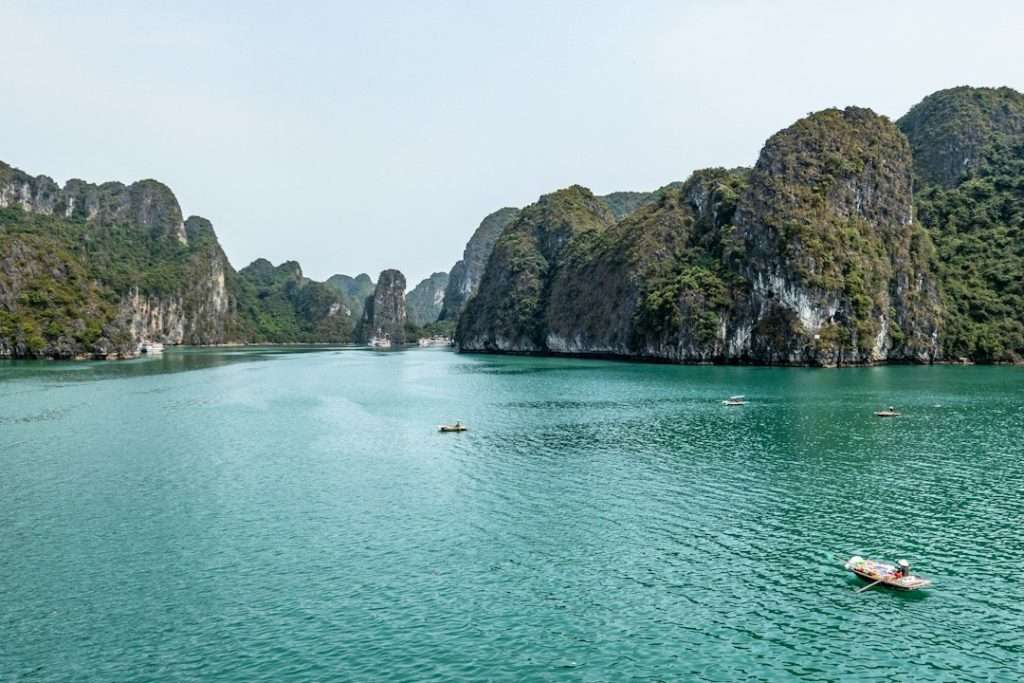
A two-week trip to Vietnam can cost $600 or $3,000, and both travelers will come home having seen Ha Long Bay, eaten pho on a plastic stool, and ridden in a few too many taxis. The difference comes down to how you travel, not just where you go. Here’s a realistic breakdown of what things actually cost, so you can budget without guessing.
Flights: the biggest variable you can’t control much
International flights into Hanoi or Ho Chi Minh City typically run $700 to $1,200 round trip from the US West Coast, and more from the East Coast. Flying from Australia or other parts of Southeast Asia is cheaper, often $150 to $400. Prices swing hard depending on season, so booking three to four months out and avoiding Tet (the Lunar New Year holiday, usually late January or February) will save you real money. Domestic flights within Vietnam, like Hanoi to Da Nang or Ho Chi Minh City to Phu Quoc, usually cost $30 to $70 if booked a couple weeks ahead.
Accommodation ranges wider than you’d expect
Budget guesthouses and hostels in Vietnam run $8 to $20 a night, and that often includes breakfast and a decent fan or AC unit. Mid-range hotels, the kind with a pool and a reliable hot shower, land between $35 and $70. At the top end, four- and five-star properties in Hoi An, Da Nang, or Nha Trang go for $100 to $250 a night, and some beachfront resorts push higher during peak season. A common pattern is to splurge on one or two nights in a nice place and spend the rest in comfortable mid-range rooms, which keeps the average nightly cost around $40 to $50.
Food costs almost nothing if you eat like a local
A bowl of pho from a street stall costs 30,000 to 45,000 dong, or roughly $1.25 to $2. Banh mi runs about the same, and a full meal at a local com binh dan (rice shop) rarely exceeds $3. Even sit-down restaurants aimed at tourists in Hanoi’s Old Quarter or Ho Chi Minh City’s District 1 charge $5 to $10 per entree. Budgeting $15 to $20 a day covers three solid meals plus coffee and snacks, and $30 to $40 a day gets you into nicer restaurants regularly without ever feeling like you’re overspending.
Getting around adds up faster than meals do
Grab, the regional ride-hailing app, is the easiest way to move around cities, and short rides typically cost $1 to $3. Overnight sleeper buses or trains between major cities, like Hanoi to Hue or Hue to Hoi An, cost $10 to $25 and double as a way to save on a night’s accommodation. Private drivers for day trips, such as the Mekong Delta or Ninh Binh, run $40 to $70 depending on distance and whether a guide is included. Motorbike rentals are cheap, around $5 to $8 a day, but factor in the cost of an international driving permit and decent travel insurance before deciding to drive yourself.
Tours and activities vary by how much hand-holding you want
A guided day trip to Ha Long Bay with a boat lunch costs $25 to $50 for a budget option, while an overnight cruise with a private cabin can run $100 to $250 per person. Entrance fees to places like the Cu Chi Tunnels or the Imperial City in Hue are usually $3 to $10. Cooking classes in Hoi An, which often include a market visit, typically cost $20 to $35. If you’d rather not piece together logistics yourself, booking through one of the top Vietnam tours operators can simplify multi-city itineraries and often works out cheaper than arranging the same transport and guides independently, since operators negotiate group rates on hotels and transfers.
Hidden costs that catch first-time visitors off guard
Visa fees are an easy one to forget. Most travelers need an e-visa, which costs $25 and should be applied for online at least a few days before departure. Travel insurance, often skipped by budget travelers, typically runs $40 to $80 for a two-week trip and is worth it given how common motorbike accidents and stomach bugs are among tourists. Tipping isn’t deeply ingrained in Vietnamese culture, but tour guides and drivers increasingly expect $2 to $5 per day, and it’s good practice to carry small bills for this. SIM cards with data cost about $5 to $10 for two to three weeks and make navigating cities far less stressful.
What a realistic daily budget looks like
A backpacker moving through Vietnam on hostels, street food, and local buses can comfortably manage on $25 to $35 a day. A mid-range traveler who wants private rooms, the occasional guided tour, and nicer meals should plan for $60 to $90 a day. Luxury travelers staying in resorts and hiring private drivers throughout can expect $150 to $300 a day without much effort. None of these numbers include flights into the country, which should be budgeted separately.
The real takeaway is that Vietnam rewards flexibility more than most destinations. Spend a little more on the handful of experiences that matter most to you, like a Ha Long Bay cruise or a nice hotel in Hoi An, and claw the money back by eating street food and taking buses instead of private cars. That balance, more than any fixed daily number, is what makes a Vietnam trip feel both affordable and worth it.